
Atlantic Aviation valued at $10 billion as Apollo joins KKR; Vista Global eyes 2027 IPO
Private equity continues consolidating aviation infrastructure while VistaJet parent considers listing. Cirrus backlog tops 1,000 aircraft; maintenance professionals warn of worsening parts supply.
Private equity is deepening its control of business aviation infrastructure as Apollo Funds acquires a significant stake in Atlantic Aviation, the FBO chain that KKR acquired in 2021. The deal values Atlantic at $10 billion, with KKR remaining a substantial shareholder. Atlantic operates 105 FBO locations in North America.
The investment comes as operators and management companies increasingly criticise private equity-backed FBOs for higher fees, particularly special event charges that have moved beyond seasonal peaks into regular-season NFL weekends and holiday travel. Flexjet Chairman Kenn Ricci has been vocal about the pressure, saying private equity firms are "driving up costs—maintenance, FBOs, everything."
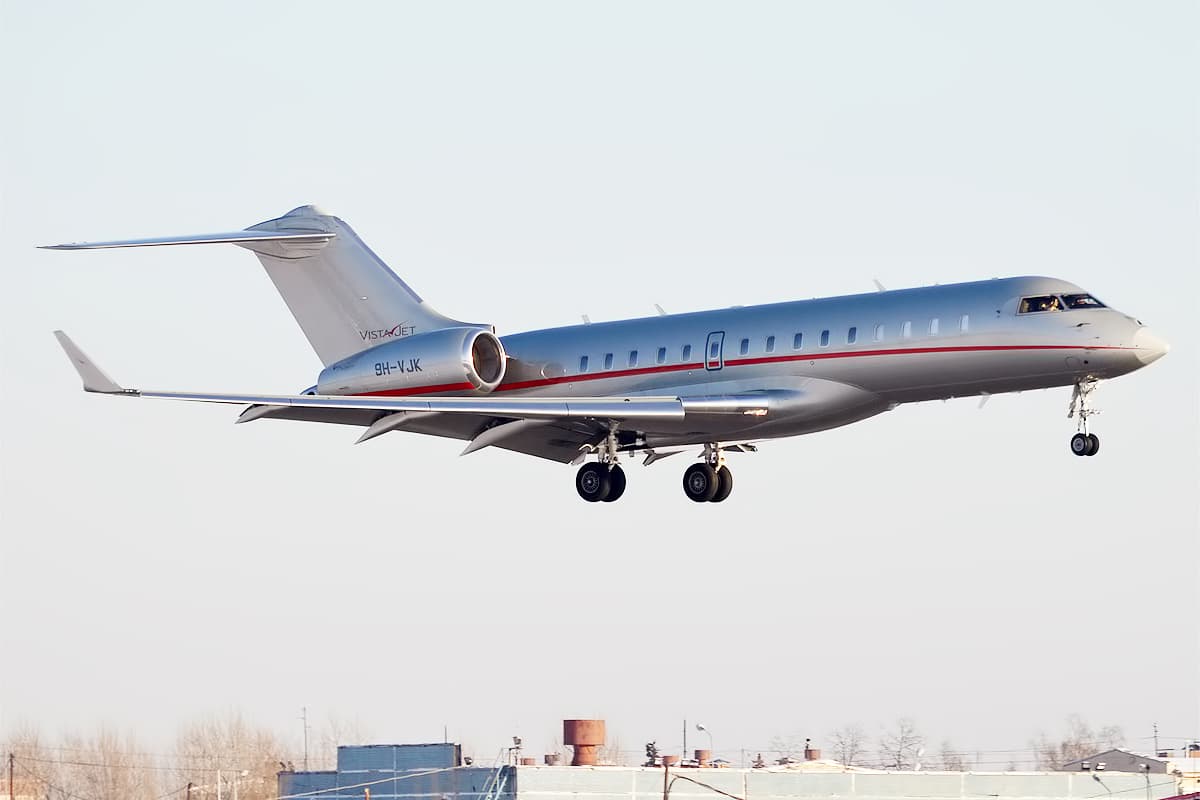
Elsewhere, Vista Global, the parent company of VistaJet and XO, is considering an IPO as early as 2027 that could value the company above $10 billion. Bank of America, UBS, and UniCredit are advising on the transaction, with Zurich and Milan under consideration as listing venues. Previous IPO reports for Vista have not materialised.
Atlantic Aviation valued at $10 billion with Apollo Funds stake
Apollo Funds has acquired a significant interest in Atlantic Aviation as part of a deal that values the FBO chain at $10 billion. KKR, which acquired Atlantic in 2021, retains a substantial shareholding.
Atlantic operates more than 100 FBO locations in North America offering fueling, maintenance, deicing, hangar leasing, and concierge services. The company is also developing a network of electrified vertiports under its Vertiports by Atlantic unit to accommodate future aircraft including electric vertical takeoff and landing vehicles.
Apollo partner David Cohen said in a statement that Atlantic has "built an irreplaceable infrastructure footprint across the nation's busiest airports, underpinned by long-term concession agreements." KKR partner Dash Lane added that the continued support reflects conviction in the platform's strength and long-term sector growth.
Private equity criticism over FBO fee increases
The deal occurs amid growing complaints from operators about fees imposed by private equity-backed FBOs. Special event charges, historically limited to major sporting events and competitions, are now routine during regular-season NFL games and holiday weekends including Presidents' Day. Fees for large cabin jets can exceed $20,000.
Flexjet Chairman Kenn Ricci has been outspoken about private equity's role in aviation cost pressures. During a conference earlier this year, when asked about top concerns, he responded, "Private equity," and noted the firms are "driving up costs—maintenance, FBOs, everything."
KKR has invested more than $12 billion across the aviation sector since 2015. Signature Aviation and Atlantic are among the FBOs regularly imposing elevated fees during peak travel periods.
Vista Global pursues 2027 IPO with $10 billion-plus valuation
Bloomberg reports that Vista Global is considering an IPO as early as 2027 that could value the parent of VistaJet and XO above $10 billion. Bank of America, UBS, and UniCredit are working with the company on the transaction, with Zurich and Milan being considered as listing venues.
The IPO could raise more than $1 billion, suggesting a limited float. Previous IPO reports for Vista, including Bloomberg reporting and 2021 reports, have not materialised. In April 2025, financial website 9fin linked Bank of America to a potential Vista IPO, which also did not occur.
In February 2026, Bank of America priced a $215 million add-on to Vista Global's existing $700 million Term Loan B. That same month, VistaJet placed a firm order for 40 Challenger 3500s with options for 120 more. Vista completed $1.3 billion in financial deals during 2025, including a $600 million equity investment led by Singapore-based RRJ Capital in March and a $700 million Senior Secured Term Loan B in April. Founder Thomas Flohr remains the controlling shareholder.
Maintenance professionals forecast worsening parts supply
Two-thirds of aviation maintenance professionals expect the parts supply environment to worsen, according to the 2026 General Aviation Parts Survey conducted by TBX using Airworthy customer data. Only 15% believe it will improve.
Of 345 survey respondents, 22% said parts availability was worsening significantly, while 44% reported slight worsening, 19% said conditions were unchanged, and 15% said they were improving. Rising costs and supply chain pressures were cited as the biggest challenges by 65% of respondents. The largest theme in free-form responses was time pressure: how quickly aircraft could be turned around and parts procured.
Airworthy CEO John McLaughlin said in a statement: "Maintenance shops are spending too much time searching for parts, finding part numbers, waiting on backorders, and sourcing alternatives." He added that as the general aviation fleet continues to age, improving parts availability and expanding access to technical data will be critical.
Of respondents, 77% represented general aviation maintenance shops, 18% were from flight schools, and 11% were business aviation MROs. Sixty-three per cent said their primary customer type was owner-flown private aircraft. Respondents cited authorized or independent distributors as their most common parts source, followed by salvage and teardown operations, then OEMs. PMA parts exceeded OEMs on availability and cost.
Private jet flight activity falls week-over-week and year-over-year
Global private jet flight activity fell in week 34, marking the 10th year-over-year weekly decline of 2026. During the week ending August 23, global private jet flights recorded approximately 74,609 total departures, a 2% drop compared to week 34 of 2025 and a 2% drop from the prior week.
North America recorded nearly 52,000 total departures, with the United States accounting for about 50,000. That represented a 2% year-over-year decline. California saw the largest year-over-year decrease at 5% fewer flights, while Texas saw a 2% increase. The U.S. saw a 4% week-over-week drop, with Florida, California, and Texas each seeing decreases.
European private jet activity remained relatively flat year-over-year, with the region recording over 12,500 total flights, just 1% fewer than the prior year. The UK, Germany, Switzerland, and Italy each saw slight year-over-year drops.
Over the past four weeks, private jets recorded nearly 308,000 total departures, a slight 1% year-over-year increase compared to the same period last year. Since week 26, there have been three up weeks, one flat week, and four down weeks.
Cirrus backlog tops 1,000 aircraft amid production expansion
Cirrus Aircraft reported its order backlog remains above 1,000 aircraft after posting higher deliveries and revenue for the first half of 2026. The manufacturer delivered 405 aircraft during the six-month period, up 16% from 350 a year earlier, and reported revenue of $737 million, up 24% from $594 million.
Orders and reservations reached 398 aircraft during the first half, compared to 241 during the same period in 2025. The company reported a book-to-bill ratio of 0.98, meaning nearly as many new orders as completed deliveries. The company reported a model-by-model breakdown was not provided. Aircraft sales generated $617 million in first-half revenue, up from $498 million a year earlier. Revenue from Cirrus Services and other operations increased from $96 million to $120 million. Net income rose to approximately $88.1 million from about $65 million during the first half of 2025.
Cirrus CEO Zean Nielsen said on the earnings call that depending on make and model, customers have to wait one to two years for delivery, which keeps the used market healthy. CFO George Letten noted the book-to-bill of 0.98 means orders matched units delivered, keeping the backlog strong.
The results follow the August 14 opening of an expanded Cirrus manufacturing facility in Grand Forks, North Dakota. The project added more than 30,000 square feet for composite manufacturing, producing components for the SR Series and Vision Jet and manufacturing composites for the new TRAC10 training aircraft. Cirrus is preparing to begin TRAC10 production ahead of planned deliveries in 2027 and is targeting a backlog that would eventually represent roughly one year of production.
What it means
The week's developments reflect concurrent pressures in different segments of business aviation. On the infrastructure side, private equity consolidation continues unabated: KKR and Apollo now control Atlantic, Signature is owned by Blackstone and partners, and smaller operators are being picked up by Bain Capital. For charter brokers and operators, this concentration narrows negotiating power on facility fees and services, particularly during peak travel periods when special event charges apply.
On the demand side, this week's flight activity data shows the market remains fragile. Ten weeks of year-over-year declines against only three in the prior year signals that the momentum of earlier 2026 has not held. The slight positive trend over the past four weeks offers limited reassurance.
Vista Global's potential IPO would represent a significant validation of the charter market if it proceeds—but the repeated postponement of IPO plans since 2021 warrants caution. A successful listing would unlock capital for the company and its investors, but the betting market has learned not to count on it.
Cirrus's strong backlog and expanding capacity suggest confidence in small aircraft demand, at least for certified piston and light turbine aircraft. A one to two-year wait for delivery is supporting the used market, which could offer relief to operators facing supply constraints elsewhere in the ecosystem. However, maintenance professionals' bleak forecast on parts availability represents a structural risk: aircraft held in inventory or in the field waiting for components do not generate utilisation revenue for their owners, and the tightening parts environment will likely persist through 2027.

.jpg)