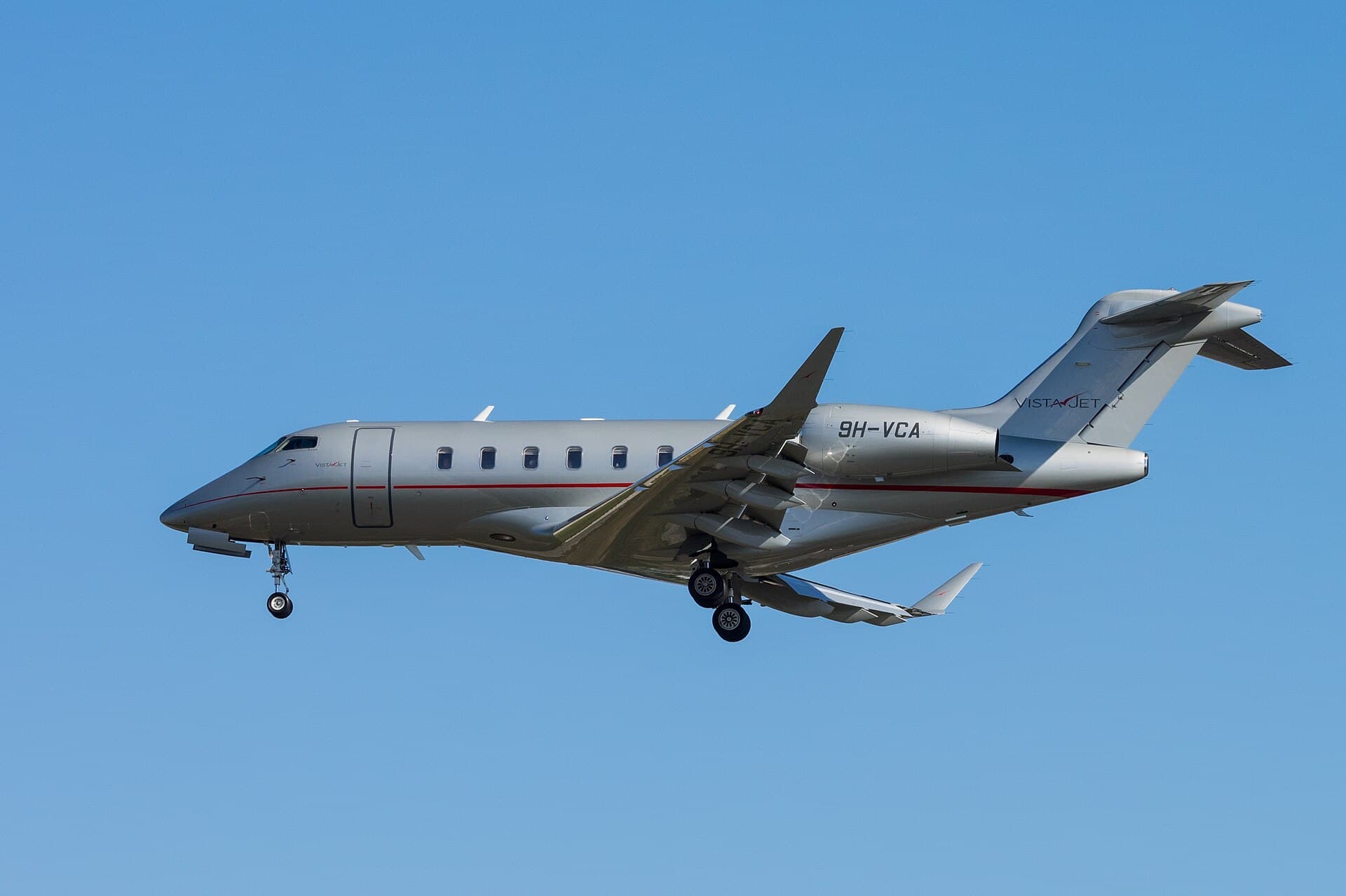
Route spotlight: New York to South Florida
Roughly 900 nautical miles, a dozen usable airport pairings, and a seasonal imbalance pronounced enough to set the supply of discounted flying for the entire eastern United States.
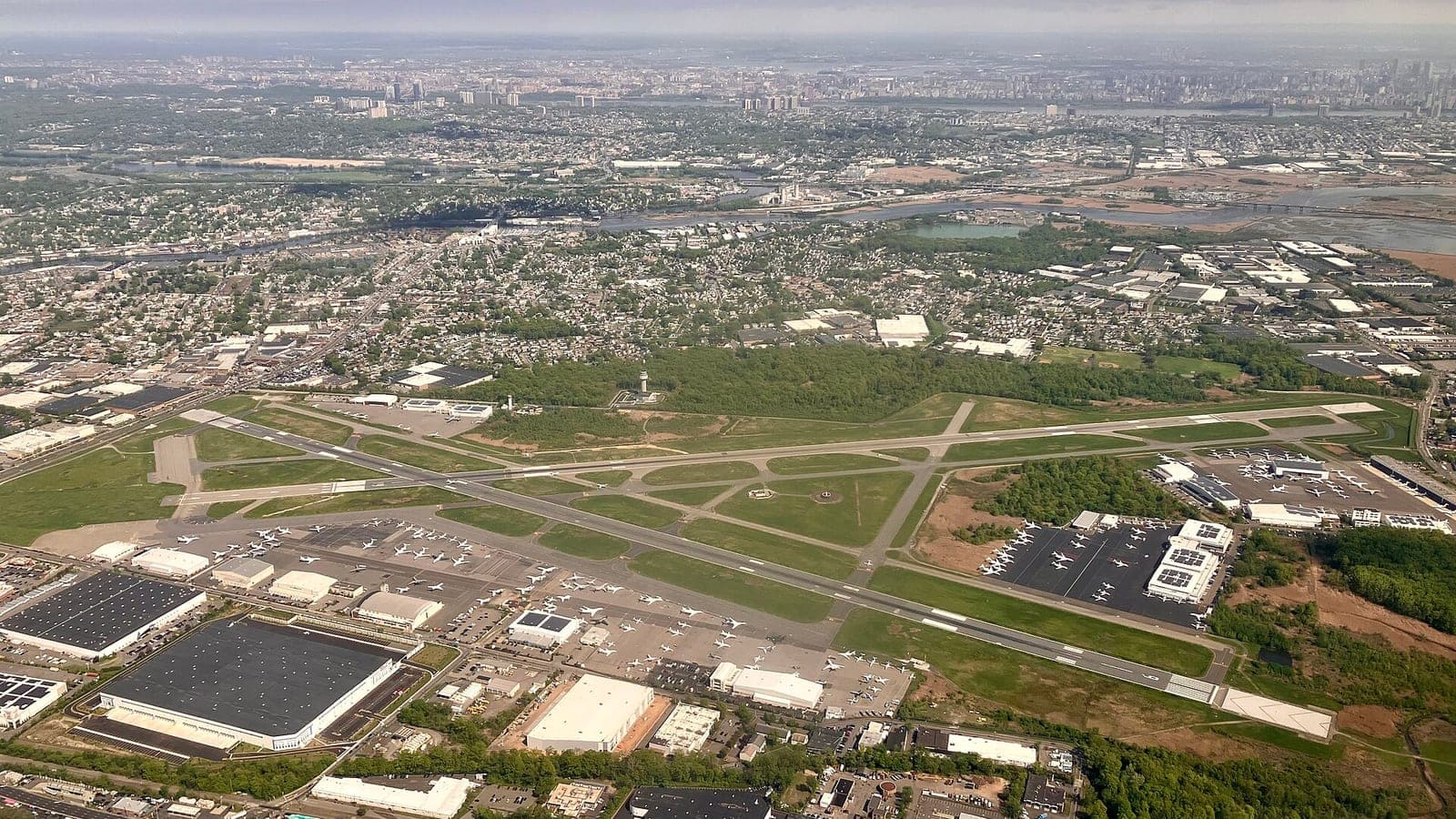
Almost every general statement made about private aviation in the United States is really a statement about one corridor. The run between the New York metropolitan area and South Florida is the densest business aviation market in the country, it is sharply seasonal, and it is directional — which together make it the largest generator of repositioning flights in the eastern United States.
It is also a useful corridor to understand precisely, because there is no single route. There are two clusters of airports at each end, and the pairing is most of the decision.
The distances
Great-circle distances, calculated from the published airport coordinates in the OurAirports dataset:
| From | To | Distance |
|---|---|---|
| Teterboro (TEB) | West Palm Beach (PBI) | 902nm |
| Republic, Farmingdale (FRG) | West Palm Beach (PBI) | 906nm |
| Teterboro (TEB) | Boca Raton (BCT) | 919nm |
| Westchester County (HPN) | West Palm Beach (PBI) | 920nm |
| Teterboro (TEB) | Fort Lauderdale (FLL) | 938nm |
| Teterboro (TEB) | Miami-Opa Locka (OPF) | 949nm |
| Westchester County (HPN) | Miami-Opa Locka (OPF) | 967nm |
Two things follow.
The first is how little the endpoints matter to the flying. The spread across every sensible pairing is 65nm — under 8% — which at typical cruise speeds is eight to ten minutes in the air. Nobody should be choosing an airport pair on distance.
The second is that these are great-circle figures, and a real flight is longer. Actual routing follows airways and air traffic control instructions, and this is some of the busiest airspace in the world. Treat the numbers above as a floor, not an estimate.
The airports, and what actually differs
Since the flying time is effectively identical, the decision is made on the ground.
At the northern end. Teterboro is the default, for reasons of geography: it is the closest general aviation field to Manhattan, and on the OurAirports data it sits at 9ft elevation in the New Jersey Meadowlands. It is also the busiest, which is the trade-off — Teterboro is where corridor congestion concentrates, and it carries curfew and noise restrictions that constrain late departures.
Westchester County, at 439ft, serves Connecticut, Fairfield County and the northern suburbs. For a passenger starting north of the city it removes a road journey that can exceed the flight time saved, and it has its own operating restrictions. Republic on Long Island, at 82ft, is the equivalent for anyone starting east of the city.
At the southern end. The dataset now lists the West Palm Beach field under the name President Donald J. Trump International Airport, with the ICAO identifier KDJT. It remains PBI in IATA terms and is still what most of the industry calls Palm Beach. It is a large airport at 19ft elevation, sharing its runways with scheduled airline traffic.
Boca Raton, at 13ft, is a smaller field suiting light and midsize aircraft, sitting directly between the Palm Beach and Fort Lauderdale catchments. Miami-Opa Locka, at 8ft, is the dedicated business aviation field for the Miami area, and it exists precisely so private traffic does not have to compete with Miami International's airline schedule. Fort Lauderdale, at 9ft, is a large airline airport with substantial private facilities.
The general rule holds: on this corridor, using the dedicated business aviation field rather than the co-located airline airport buys ground time at both ends — and ground time is where private aviation's real advantage lives.
Why the corridor is directional
Demand here is seasonal and it does not balance.
Through the winter the flow runs south: residents, second-home owners and the businesses that follow them. From roughly December to April this is one of the busiest private aviation markets anywhere. Then it reverses in spring.
The consequence is structural. Aircraft accumulate at one end and have to be brought back to the other, which is why this corridor produces more empty-leg inventory than any other in the eastern United States — and why that inventory is overwhelmingly one-directional at any given moment. In the depths of the season, the discounted flying available northbound is not the same as the discounted flying available southbound, and anyone planning a round trip on empty legs is really planning two unrelated problems. The mechanics and the risks are set out in our guide to what an empty leg actually buys you.
Aircraft, and the constraint that actually binds
At roughly 900nm this is comfortably within range for light jets, and virtually the entire charter fleet can fly it nonstop with normal reserves. Range is not the binding constraint on this corridor.
Crew duty is more likely to be. A same-day return — south in the morning, back in the evening — puts two sectors plus ground time inside one duty period, and under 14 CFR 135.267 an on-demand operator's crew flight time and rest are limited by regulation. On a day that starts early or runs into delays, the limit that stops the aircraft is a legal one rather than a technical one. It is the most common reason a same-day round trip on this route needs a second crew, and it is the cost that surprises people.
What we are not quoting
Departure counts and corridor rankings for this route circulate widely, generally sourced to commercial datasets such as ARGUS TRAQPak and frequently reproduced without the original figure being checkable. We are not repeating them here.
The same applies to pricing. Charter rates on this corridor vary with aircraft category, season, day of week and booking lead time, and any single figure quoted without those conditions attached is close to meaningless. Where we publish route pricing it will be modelled from data we hold, with the method stated — and it will still be an estimate rather than a quote.
Sources
OurAirports airport dataset · Accessed 2026-08-13
Teterboro Airport · Accessed 2026-08-13
14 CFR 135.267 — Flight time limitations and rest requirements · Accessed 2026-08-13